
Sote - turning cargo Into collateral
Date
2018 - 2024
Service
Logistics & trade finance
Client
Sote inc. Co-founder & CEO
Project Overview
Background
Africa faces over $100B in trade loan gap among medium and large businesses. In our perspective, part of the root cause is that banks require tangible real estate as collateral for majority of business loans. As a finite resource, it holds back growth in the capable economy.
This reliance on tangible real estate as collateral, in our opinion, is a symptom of a larger problem we aimed to tackle. The continent lacks a clear, scalable, cross-border credit scoring infrastructure. We wondered:
What if real-world logistics containers in Africa could be used as a foundational proprietary data source for such an underwriting model?
Why we started with logistics
Flexport pioneered the model.
The question: could a business’s cargo and verifiable real world trading give a bank another way to assess credit and secure a business loan?
Real estate was the collateral banks commonly desired in the market. We wanted to make the goods moving through a business’ supply chain in real time, and the evidence of that trade, reliable in lending decisions.
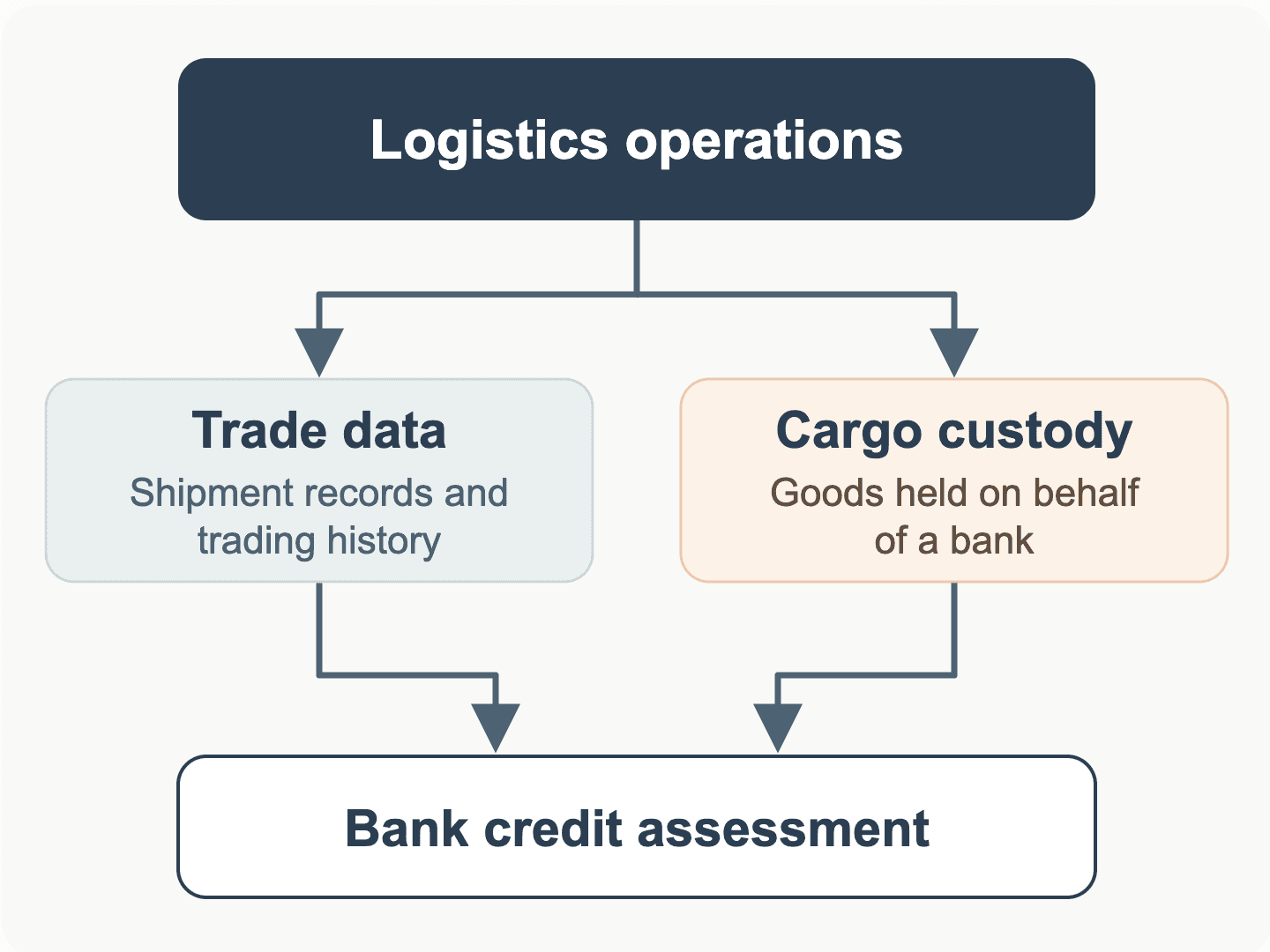
Sote Logistics handled freight forwarding, customs, warehousing and transport. That operation gave us two items:
Trade data: shipment status, documents, invoices, transaction histories and supplier information.
Cargo custody: legal and insurance arrangements to hold a borrower’s goods on behalf of a bank.
Real-time data to help a bank assess the business. Custody to give it a way to use the cargo as recordable security.
The Flexport Capital model demonstrated that this model, bringing the two pieces together, worked.
What we built
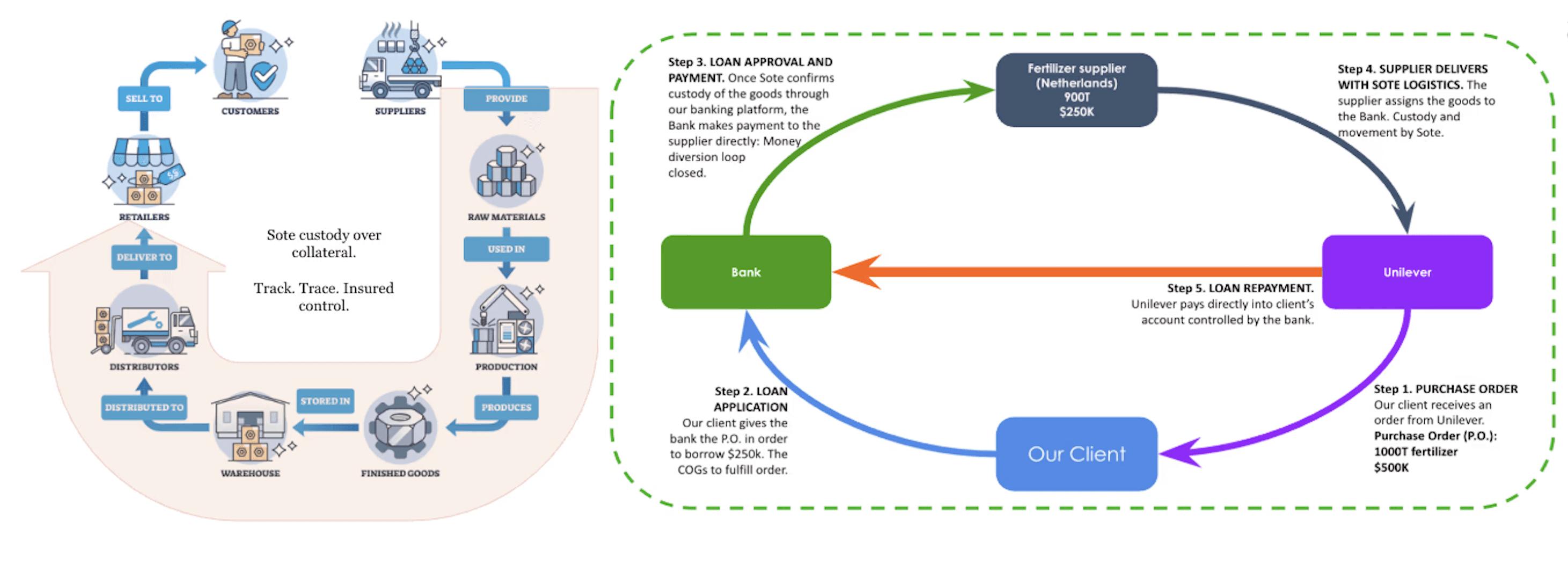
We combined an internal operations app, customer-facing shipment tracking dashboard, field teams at ports, and a bank-facing platform for managing trade loans.
The logistics operation handled around $20m in cargo value each month. Moving those goods generated the data and custody arrangements the finance product depended on.
The longer-term ambition was to help clients build credit histories through cargo-backed lending, then make lending without collateral possible.
Why we worked with banks
Our expertise was in logistics, insurance, credit assessment, underwriting and cargo custody.
Raising a large pool of lending capital in Africa was outside our experience and licensing.
We chose to demonstrate the value and reliability of our solutions, and build long term mutual growth relationships. We ran bank pilots. In one, our system demonstrated its capabilities in identifying a potential default three months early.
Where our approach stalled
We underestimated the effort required to move beyond pilots. Deployment required changes to lending policy, including board approval. Our proposals reached bank board discussions, but we could not get them prioritized sufficiently for a decision.
My conclusion was that scaling the finance business would have required Sote to raise its own lending capital. That would also have meant taking responsibility for the loan portfolio; after overcoming a new lending license challenge. A different model.
What I’m carrying forward
A pilot still needs a path to adoption.
Relationship lead time. Building relationships is a useful exercise, either done in advance, or intentionally budgeted for in time and accounts.